Many Marriages
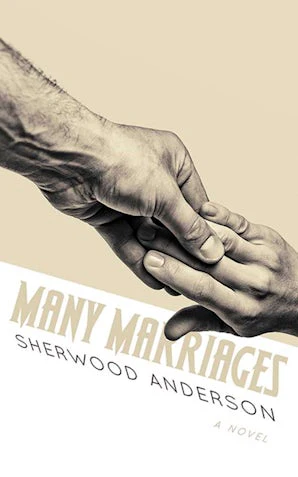
"A time will come when love like a sheet of fire will run through the towns and cities. It will tear walls away. It will destroy ugly houses. It will tear ugly clothes off the bodies of men and women. They will build anew and build beautifully," declares John Webster, a quiet middle-aged businessman who has repressed his dreams in order to function as a washing machine manufacturer. Webster gradually awakens to the inner voices that encourage him to abandon his job and family and live what he believes to be the truth of life. His search for spiritual salvation leads to the embrace of a gospel of sexual emancipation — a complete and absolute acceptance of the flesh, without shame or guilt.
Praised by F. Scott Fitzgerald as Sherwood Anderson's finest work, Many Marriages reflects the complacency of the United States in the early 20th century. The country had pursued material comfort and profit until it settled into a process as automatic and mechanical as any of Webster's washing machines. Sex, Anderson proclaimed, could serve as the medium for self-realization and universal communion, returning society to the purity of a preindustrial state. This psychological novel, like works by Sigmund Freud and D. H. Lawrence, excited a scandal upon its 1923 publication, and it remains a landmark in American literature's advance toward sexual openness.
Praised by F. Scott Fitzgerald as Sherwood Anderson's finest work, Many Marriages reflects the complacency of the United States in the early 20th century. The country had pursued material comfort and profit until it settled into a process as automatic and mechanical as any of Webster's washing machines. Sex, Anderson proclaimed, could serve as the medium for self-realization and universal communion, returning society to the purity of a preindustrial state. This psychological novel, like works by Sigmund Freud and D. H. Lawrence, excited a scandal upon its 1923 publication, and it remains a landmark in American literature's advance toward sexual openness.
Reprint of the B. W. Huebsch, Inc., New York, 1923 edition.
"A time will come when love like a sheet of fire will run through the towns and cities. It will tear walls away. It will destroy ugly houses. It will tear ugly clothes off the bodies of men and women. They will build anew and build beautifully," declares John Webster, a quiet middle-aged businessman who has repressed his dreams in order to function as a washing machine manufacturer. Webster gradually awakens to the inner voices that encourage him to abandon his job and family and live what he believes to be the truth of life. His search for spiritual salvation leads to the embrace of a gospel of sexual emancipation — a complete and absolute acceptance of the flesh, without shame or guilt.
Praised by F. Scott Fitzgerald as Sherwood Anderson's finest work, Many Marriages reflects the complacency of the United States in the early 20th century. The country had pursued material comfort and profit until it settled into a process as automatic and mechanical as any of Webster's washing machines. Sex, Anderson proclaimed, could serve as the medium for self-realization and universal communion, returning society to the purity of a preindustrial state. This psychological novel, like works by Sigmund Freud and D. H. Lawrence, excited a scandal upon its 1923 publication, and it remains a landmark in American literature's advance toward sexual openness.
Praised by F. Scott Fitzgerald as Sherwood Anderson's finest work, Many Marriages reflects the complacency of the United States in the early 20th century. The country had pursued material comfort and profit until it settled into a process as automatic and mechanical as any of Webster's washing machines. Sex, Anderson proclaimed, could serve as the medium for self-realization and universal communion, returning society to the purity of a preindustrial state. This psychological novel, like works by Sigmund Freud and D. H. Lawrence, excited a scandal upon its 1923 publication, and it remains a landmark in American literature's advance toward sexual openness.
Reprint of the B. W. Huebsch, Inc., New York, 1923 edition.
$4.53
Original: $12.95
-65%Many Marriages—
$12.95
$4.53Description
"A time will come when love like a sheet of fire will run through the towns and cities. It will tear walls away. It will destroy ugly houses. It will tear ugly clothes off the bodies of men and women. They will build anew and build beautifully," declares John Webster, a quiet middle-aged businessman who has repressed his dreams in order to function as a washing machine manufacturer. Webster gradually awakens to the inner voices that encourage him to abandon his job and family and live what he believes to be the truth of life. His search for spiritual salvation leads to the embrace of a gospel of sexual emancipation — a complete and absolute acceptance of the flesh, without shame or guilt.
Praised by F. Scott Fitzgerald as Sherwood Anderson's finest work, Many Marriages reflects the complacency of the United States in the early 20th century. The country had pursued material comfort and profit until it settled into a process as automatic and mechanical as any of Webster's washing machines. Sex, Anderson proclaimed, could serve as the medium for self-realization and universal communion, returning society to the purity of a preindustrial state. This psychological novel, like works by Sigmund Freud and D. H. Lawrence, excited a scandal upon its 1923 publication, and it remains a landmark in American literature's advance toward sexual openness.
Praised by F. Scott Fitzgerald as Sherwood Anderson's finest work, Many Marriages reflects the complacency of the United States in the early 20th century. The country had pursued material comfort and profit until it settled into a process as automatic and mechanical as any of Webster's washing machines. Sex, Anderson proclaimed, could serve as the medium for self-realization and universal communion, returning society to the purity of a preindustrial state. This psychological novel, like works by Sigmund Freud and D. H. Lawrence, excited a scandal upon its 1923 publication, and it remains a landmark in American literature's advance toward sexual openness.
Reprint of the B. W. Huebsch, Inc., New York, 1923 edition.